

Comparing Bamboo and Eucalyptus Sheets

Sleeping well starts with choosing the right bedding. When seeking luxurious and sustainable bedding, both CleanBamboo® and eucalyptus fabrics emerge as popular contenders. Consumers appreciate their shared origins from fast-growing, renewable resources. However, while they share some similarities, a closer examination reveals key differences. We will examine the factors that make ettitude’s proprietary fabric, CleanBamboo®, the ideal foundation for your best sleep.
Understanding Eucalyptus Fiber: From Tree to Textile
Eucalyptus trees are indeed fast-growing and can regenerate quickly, which makes them potentially renewable under careful management. However, they are often cultivated in monoculture plantations, and this limits biodiversity and can cause environmental harm, meaning not all eucalyptus production is truly sustainable.
Growth and Renewability: Eucalyptus species grow rapidly—some can reach harvestable maturity within 8–10 years and even regrow from stumps after cutting (a process called coppicing). This quick rotation makes them more renewable than many hardwoods when managed properly and re-harvested in cycles.
Environmental Concerns: Despite these regenerative traits, eucalyptus plantations often consist of monocultures, which can negatively affect ecosystems. These plantations may:
- Deplete local water tables because eucalyptus consumes a lot of water.
- Reduce biodiversity since few other species thrive under them.
- Become invasive in non-native regions, crowding out local flora.
Nuanced Assessment: So while eucalyptus has traits that make it a renewable resource in theory (fast growth, coppicing, and high yield), the sustainability of eucalyptus forestry depends heavily on local practices. Responsibly managed mixed-forestry systems with ecological safeguards can make eucalyptus a renewable source, but industrial monoculture plantations are often not ecologically sustainable.
Environmental Cost of Eucalyptus Farming
Both CleanBamboo® and eucalyptus fabrics use a Lyocell production method to transform them into soft fibers. This process is generally more eco-friendly than the traditional viscose method. However, the raw materials themselves present a distinct advantage for bamboo. Bamboo is a grass that grows exceptionally fast, often in less-than-ideal soil, and requires very little water. Eucalyptus trees need more water and resources to grow, and they are typically harvested after several years. Bamboo’s rapid growth cycle and resource efficiency give it a smaller environmental footprint from the very start.
Bamboo matures for harvest in just a few years, a fraction of the time it takes for eucalyptus trees. As a fast-growing and resilient grass, bamboo typically requires no pesticides or fertilizers to thrive. It grows quickly and densely, which naturally outcompetes weeds. It can also flourish in a variety of soil types without heavy chemical support.
On the other hand, eucalyptus farming has both advantages and disadvantages from an environmental perspective, which are important to consider.
-
Water Consumption: Eucalyptus trees are heavy water consumers. Large commercial plantations can deplete local water tables and affect the surrounding ecosystem, especially in regions that are naturally dry. This has been a significant point of criticism for this type of farming.
-
Biodiversity: The impact of eucalyptus monoculture plantations on biodiversity is significant. These plantations can replace native forests and other natural ecosystems, which leads to a reduction in local biodiversity.
-
Renewability: On the positive side, eucalyptus trees are a fast-growing, renewable resource. The fabric itself is typically made using a closed-loop Lyocell process, which is highly efficient. This method recycles almost all of its water and solvents, which is a significant environmental benefit and a key reason why eucalyptus fabrics are considered a more sustainable choice than many other conventional textiles.
Nevertheless, bamboo has an advantage in terms of its cultivation as it is a low-maintenance crop that rarely requires the use of chemical inputs.
A Texture and Feel Comparison
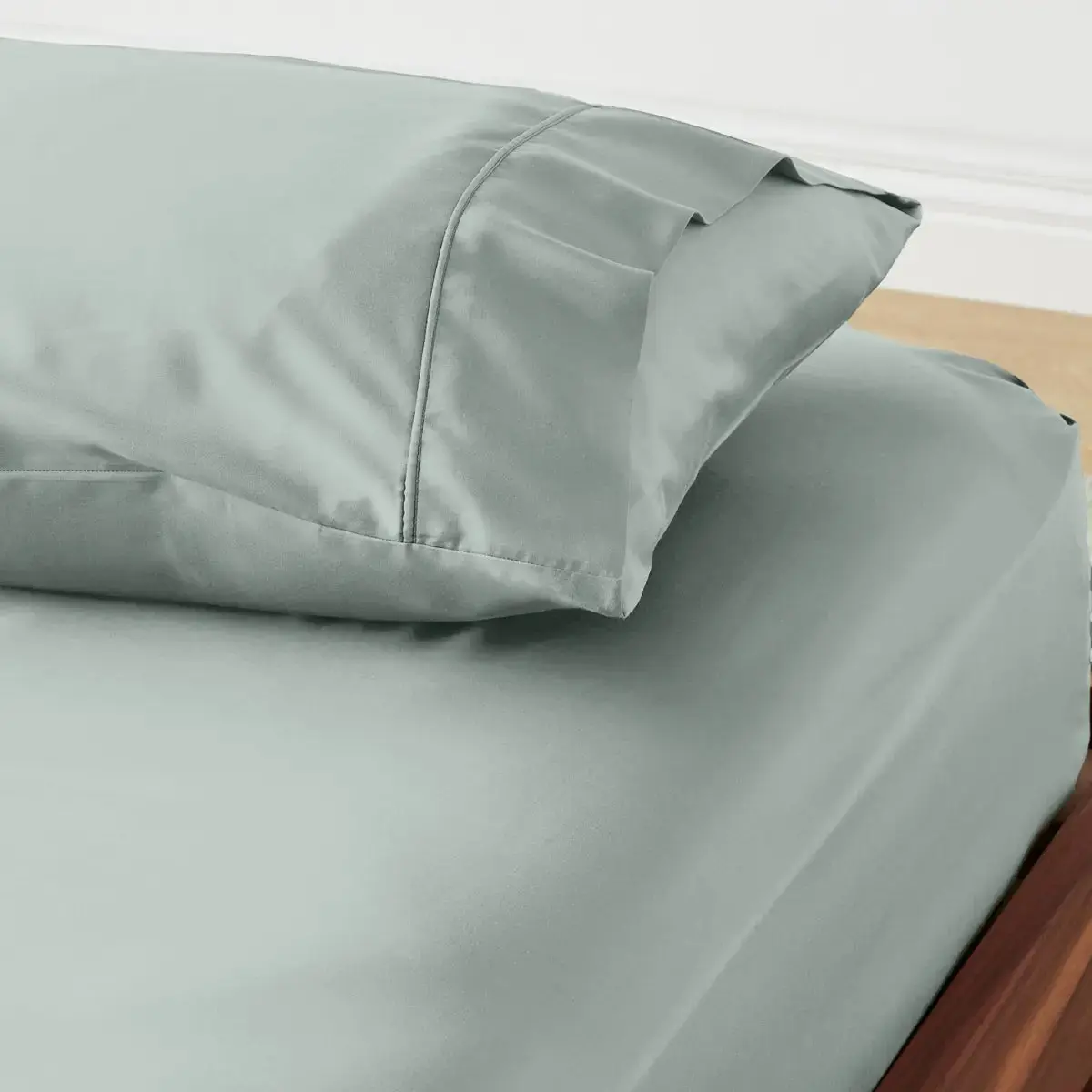
The quality of a sheet set often comes down to how it feels against your skin. While eucalyptus sheets feel smooth and cool, they usually have a slightly crisp texture reminiscent of a high-quality cotton percale. Bamboo sheets, on the other hand, offer a distinct, silk-like softness and drape that feels exceptionally indulgent. This subtle difference in texture elevates the sleeping experience from simply comfortable to truly luxurious.
-
Silky and Smooth: Bamboo bedding’s natural fibers have a rounder, smoother surface, which prevents friction and irritation. This makes them feel incredibly soft and glide across the skin, which is ideal for people with sensitive skin or those who desire an indulgent feel.
-
Buttery Soft: The natural properties of the bamboo Lyocell give the fabric a luxurious, fluid drape and a soft touch that feels more refined than many other materials.
Eucalyptus sheets, also typically made with the Lyocell process (often under the Tencel brand name), have a different texture. They are also incredibly soft and gentle, but their feel is distinct.
-
Smooth and Crisp: Eucalyptus fabric often has a feel that is described as a blend between silk and high-quality cotton percale. It feels soft but can have a light crispness or "snap" to it.
-
Lustrous Sheen: Like bamboo, eucalyptus Lyocell has a smooth surface that gives it a beautiful sheen, but the overall drape and feel are often less "buttery" than bamboo.
Breathability and Cooling Properties Explained
Both eucalyptus and bamboo fabrics are naturally breathable, but bamboo's unique fiber structure, however, creates an exceptionally porous fabric. This quality allows for a high degree of air circulation that prevents heat buildup between the sheets and your body. The breathability of bamboo makes it feel airy and light, providing a comfortable sleeping environment.
A fabric’s ability to regulate temperature is closely tied to its capacity for moisture wicking, which is the fabric’s ability to draw moisture away from the body. Eucalyptus fabric is absorbent and manages moisture well. However, third-party testing shows that bamboo sheets are far superior in their moisture-wicking capabilities. This allows the fabric to pull sweat away from your skin and release it for rapid evaporation. This process cools your body naturally and keeps you feeling dry. This advanced moisture management is what gives bamboo a noticeable edge over eucalyptus in temperature regulation.
Why Longevity Matters in Luxury Bedding
Durable sheets not only represent a smarter purchase but also a more sustainable bedding choice because they require less frequent replacement. ettitude offers luxury bamboo bedding with superior durability. Our CleanBamboo®'s tensile strength, which is its resistance to tearing and pulling, often outperforms competitors in ASTM International tests. This resilience ensures your sheets remain soft, smooth, and free from tears even after many washes.
Both CleanBamboo® and eucalyptus fabrics are strong because they use a similar Lyocell production process, which creates long, resilient fibers. However, third party testing shows that CleanBamboo® fibers often have superior tensile strength and a natural resistance to pilling compared to other fabrics. This means bamboo sheets can better resist tearing and surface damage over their lifespan compared to a leading eucalyptus brand.
Why Choose Bamboo over Eucalyptus Bedding
Choosing the right bedding is important for a restful and healthy sleep experience. While both CleanBamboo® and eucalyptus fabrics come from fast-growing, renewable resources, CleanBamboo® stands out as the more practical choice. Bamboo’s natural silk-like softness, superior moisture-wicking, and temperature regulation create a luxurious and adaptable sleeping experience. CleanBamboo® sheets also demonstrate exceptional durability and resistance to wear, ensuring long-lasting comfort and value. From an environmental perspective, bamboo’s rapid growth, minimal water and chemical needs, and lower overall impact make it the more sustainable option.
Bamboo Sheets Vs. Eucalyptus Bedding
| Feature | CleanBamboo® Bedding | Eucalyptus Leading Brand |
| Source | Derived from bamboo, a fast growing and low-maintenance crop known for its sustainability | Sourced from eucalyptus trees, a hardwood species known for its versatile uses ranging from essential oils to durable timber |
| Softness & Texture | Silk-like softness with a smooth, buttery drape ideal for sensitive skin | Soft and smooth with a crisp, cool feel similar to cotton percale |
| Pilling (ASTM D3512 Test) | Achieves an impressive rating of 4.5 out of 5, reflecting its exceptional resistance to pilling | Although it surpasses the industry standard of 3.5, it still falls short of CleanBamboo®’s superior rating of 4.5 |
| Temperature Regulation (FTTS-FA-019 Qmax Test) | Boasts a high w/cm² rating of approximately 0.22 to 0.23, demonstrating its superior ability to dissipate heat and restore a cool feel more rapidly than comparable eucalyptus brands | Registers a slightly lower rating of approximately 0.21 w/cm² |
| Longevity & Quality of Fabric (ASTM D4966, Option 1 Test) | Meets the industry standard with an impressive rating of 10,000, demonstrating its significantly longer lifespan | Falls short of the industry standard by registering a rating below 10,000 |
| Sustainability | Characterized by rapid growth, minimal water and chemical usage, and a significantly reduced environmental footprint | Renewable resources with higher water demands, and monoculture plantations may negatively affect biodiversity |
Experience Ultimate Softness and Durability

Transform your bedroom into a sanctuary of comfort with ettitude's eco friendly bamboo bedding. Experience the unmatched softness and breathable luxury of our Signature Bamboo Sheets. For those seeking a refined touch paired with enduring durability, our Luxe Bamboo Sheets offer a dreamy drape and exceptional moisture-wicking coolness.
For a limited time, we’re giving you $100 off your entire order when you spend $400 or more—just use the code WELCOME100 at checkout. This offer is valid for first-time customers, and it can only be used once. WELCOME100 can’t be combined with other discounts.
Don’t wait—your best night’s sleep is just a click away. Shop now at www.ettitude.com and claim your savings.