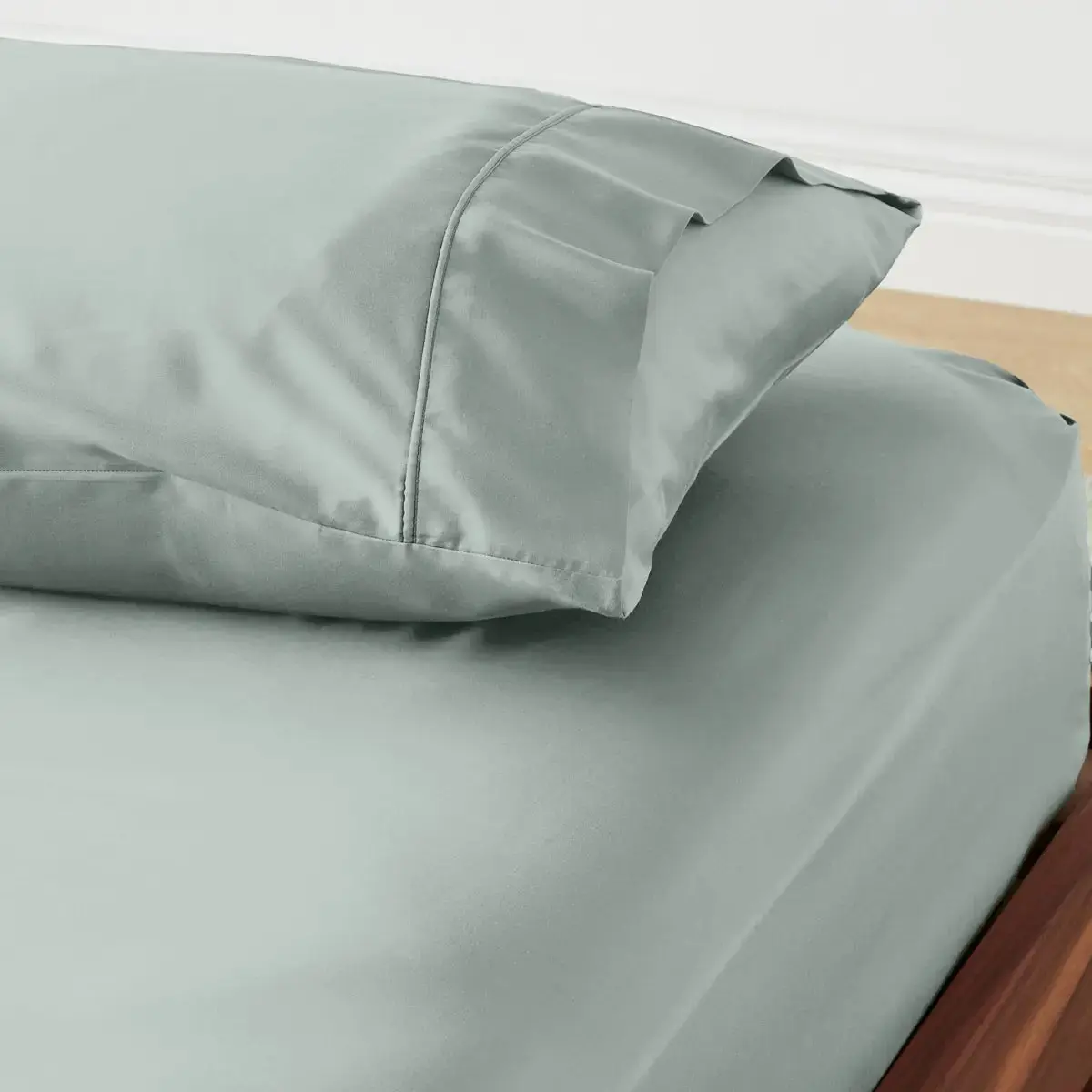


A Guide to Eco-Friendly, Sustainable Luxury Sheets
 Bamboo fabric and bedding have grown in popularity due to their sustainable origins and luxurious comfort. As more people recognize the importance of making mindful environmental choices, bamboo stands out as a renewable and eco-friendly material that aligns with the values of sustainable living. However, the journey from raw bamboo to the soft, silky fabric found in bedding involves complex processes that can affect both quality and environmental footprint. To help you better understand those essential details so you can make well-informed decisions while purchasing healthier, more sustainable and more comfortable bedding options, Phoebe Yu, Founder & CEO of ettitude, shares expert insights on the bamboo fabric creation process, organic certification, softness, and breathability.
What does the process of creating fibers from bamboo entail?
Phoebe Yu: “The transformation of bamboo into fabric involves several key steps. First, mature bamboo stalks are harvested without uprooting the plant, much like trimming grass. Hence, the roots remain intact, allowing them to continue capturing CO2. Bamboo doesn’t need pesticides or fertilizers, which makes it a highly sustainable fiber source. Our bamboo at ettitude is FSC-certified, Eco-Cert organic, and grown entirely with rainwater.
Next, fiber extraction occurs through either mechanical or chemical processing. Mechanical processing crushes the bamboo and uses natural enzymes to break it down, creating coarser fibers suitable for uses like baskets. Most bamboo textiles, however, come from chemical processing, particularly viscose or rayon, which produces a soft, silk-like fabric but involves harmful solvents.
At ettitude, we utilize CleanBamboo®—our proprietary lyocell-like process—which employs zero harmful chemicals and a closed-loop system that reuses water and solvents, thereby reducing environmental impact. Third-party lifecycle assessments show CleanBamboo significantly reduces wastewater, CO2 emissions, and fossil fuel usage compared to bamboo viscose, cotton and even conventional lyocell.
Finally, the fibers are spun into yarns, and are woven using sateen or twill weaves to achieve softness and durability. Our CleanBamboo sateen fabric is proven to maintain superior strength, appearance, breathability, and moisture-wicking after extensive washing and UV exposure.”
What makes certifying bamboo as organic different from other materials like cotton?
“Organic certification for bamboo faces unique challenges compared to cotton. Bamboo grows rapidly without chemicals and can be certified organic at the cultivation stage. However, the chemical-intensive processes required to convert bamboo into textile fibers—especially viscose/rayon—complicate certifying the finished products as organic.
Certification standards, such as the Global Organic Textile Standard (GOTS) and the Organic Cotton Standard (OCS), assess both farming and processing stages to ensure minimal use of harmful chemicals and promote environmental protection. At ettitude, we are actively pursuing OCS certification for our CleanBamboo® textiles.
We also prioritize certifications that ensure product safety and quality. Although OEKO-TEX does not certify organic status, its Standard 100 certification verifies that final products are free from harmful chemicals. At ettitude, we have achieved OEKO-TEX Class I certification for our products. This is the highest level of OEKO-TEX, ensuring safety even for babies and individuals with sensitive skin, while most bedding only meets Class II standards (safe for skin contact). Other certifications like BlueSign and ZDHC also verify the safety of chemicals and wastewater impact during production.”
How does bamboo get its silky/soft texture?
“The softness in bamboo fabric comes from the structure and treatment of its fibers. Bamboo fibers are Man-Made Cellulosic Fibers (MMCFs), similar to those created from wood pulp but derived from bamboo’s regenerative cellulose.
The fibers’ fine diameter allows them to be spun into fine yarns that produce smooth, silky fabrics. Bamboo viscose/rayon fibers are very smooth and round but rely on harsher chemical treatments, which impact durability. ettitude’s CleanBamboo® lyocell process creates a fiber with a more natural structure that feels just as silky, yet is more durable and longer-lasting. Additionally, CleanBamboo fabric can mimic other luxurious fibers like cotton, wool, and cashmere.
Weaving techniques also enhance softness. For example, sateen weaving accentuates the fabric’s luster and smooth touch, making bamboo sateen bedding feel luxurious and akin to silk.”
What makes bamboo bedding so breathable?
“Bamboo bedding’s breathability is one of its most sought-after features. First, bamboo fibers excel at moisture-wicking—they absorb sweat and allow it to evaporate quickly, keeping sleepers dry and comfortable.
The fabric also adapts to temperature, providing warmth when it’s cold and cooling when it’s warm, making it versatile for all seasons. Bamboo fibers—including viscose, generic lyocell, and CleanBamboo®—have a porous structure that enhances air circulation, reducing overheating during sleep. The exact method by which air moves through these fibers varies. Still, the result is consistently superior breathability compared to many conventional textiles.
Together, these properties help bamboo bedding deliver comfort, sustainability, and hypoallergenic benefits.”
Viscose vs. Lyocell vs. CleanBamboo® Lyocell
| Property | CleanBamboo® Lyocell | Conventional Tree Lyocell | Viscose |
| Cross-section | Cotton-/wool-like; natural irregularity | Round, smooth | Irregular, serrated |
| Fiber packing | Balanced: allows airflow | Tighter | Looser |
| Surface texture | Smooth with natural nubs | Very smooth | Rougher |
| Fabric density | Moderate, optimized for breathability | Higher (less breathable) | Lower (more breathable) |
| Moisture interaction | High absorption, dries fast | High absorption, slow to dry | High absorption, retains water |
| Fibrillation (a.k.a. pilling) | Engineered to resist fibrillation | High (unless treated) | Low |
| Air permeability | High – aided by textured surface | Lower due to tight structure | Generally high |
| Comfort performance | Breathable, soft, dry-to-touch feel | Smooth, cool hand feel | Soft but can feel damp |
About Phoebe Yu, trailblazer for eco-friendly, elegant bedding
Phoebe Yu is the visionary Founder and CEO of ettitude, an award-winning luxury home goods brand on a mission to reduce the harmful impacts of textiles. She founded ettitude, developing the brand’s signature CleanBamboo® fabric through years of research to offer luxurious, sustainable bedding. Her leadership has propelled ettitude into a global brand recognized for combining elegance with environmental responsibility.