

Comment Célébrer des Fêtes Durables : Conseils pour un Noël Sans Plastique
Par Phoebe Yu, Fondatrice et PDG d'ettitude
En feuilletant de vieilles photos, j'ai retrouvé celle-ci, d'un Noël en Australie il y a 10 ans.

C'est une photo de moi, organisant les cadeaux sous notre « sapin » de Noël.
Nous avons utilisé cette option autocollante car nous n'avions pas beaucoup de place pour un vrai sapin et ne voulions absolument pas d'un sapin en plastique.
Cela m'a fait penser à d'autres façons de réduire la consommation de plastique et de créer des fêtes vraiment durables tout en profitant des traditions que nous aimons. Bien qu'elles aient plus de 50 ans, les « 3 R » de Réduire, Réutiliser et Recycler restent un bon guide ici.Embellissez de manière Durable : Idées de Décoration Écologiques
Évitez les arbres "zombies"
Presque tous les sapins artificiels sont fabriqués en PVC. Même ceux qui utilisent du bioplastique sont encore majoritairement en PVC. Ils libèrent toujours des microplastiques et des composés organiques volatils (COV) dans votre maison. Vous pouvez en savoir plus sur les dangers des plastiques pour votre santé dans cet article de blog.
Si vous devez avoir un sapin, optez pour la méthode "à l'ancienne" et procurez-vous un vrai sapin si vous le pouvez. Ils sont magnifiques et sentent merveilleusement bon. Ils sont locaux et durables, ce qui vous évite également le coût environnemental du transport depuis l'étranger.
Utilisez des ornements sans plastique
Si vous utilisez un sapin, l'une des parties amusantes est de le décorer. La plupart des ornements sont en plastique, mais les alternatives ont souvent l'air bien plus haut de gamme ! Verre, bois, et même laine ! Il y a beaucoup d'options.
Alternatives aux jupes de sapin
Beaucoup de gens utilisent des jupes de sapin de Noël en polyester. Elles peuvent être jolies, mais c'est encore du plastique dont vous n'avez pas besoin.
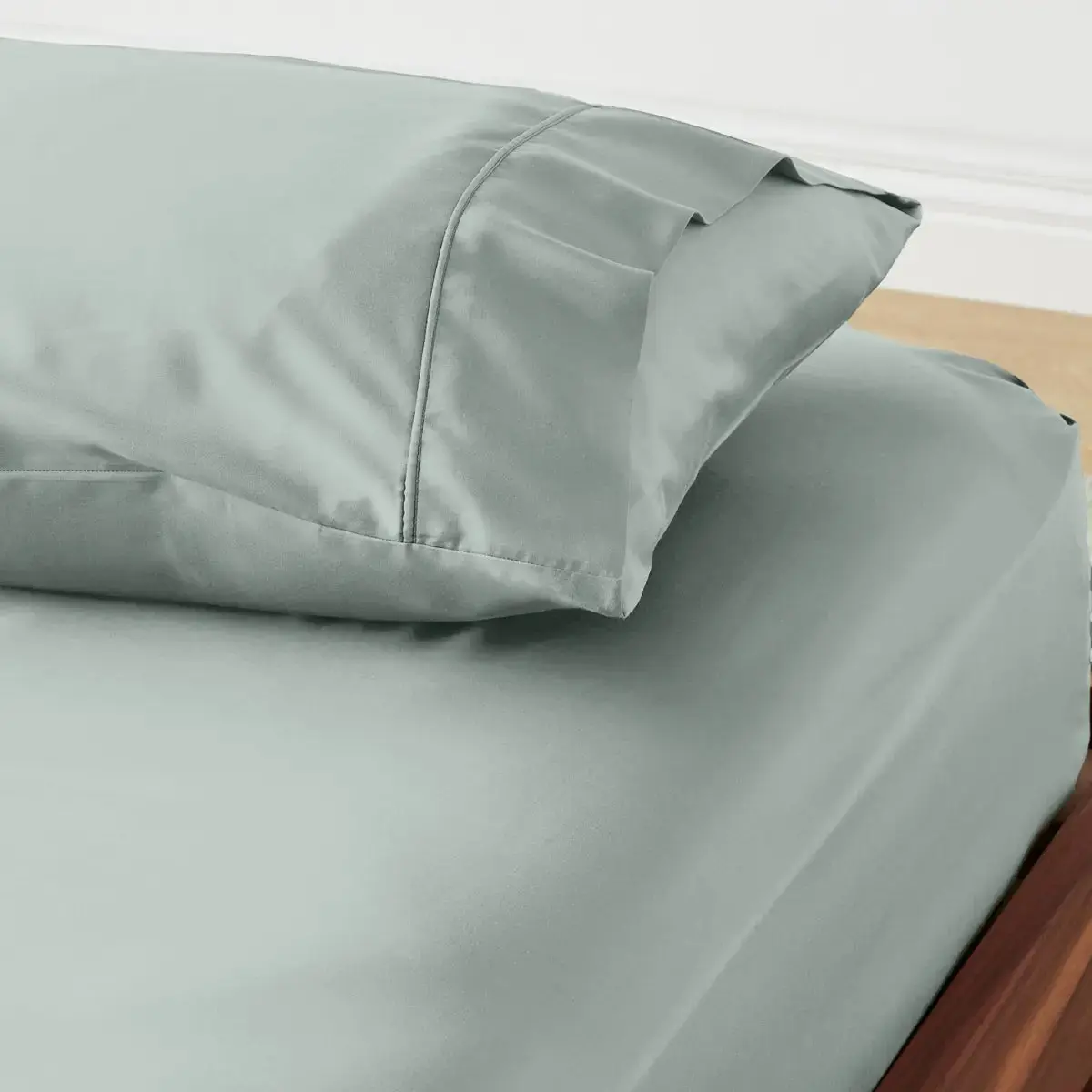
Ma cofondatrice a utilisé ses anciens draps ettitude comme jupe de sapin par le passé. Le blanc donne une jolie impression de neige.

Il existe également des "colliers" de sapin qui peuvent être fabriqués en métal ou d'autres matériaux recyclables non plastiques.
Options écologiques pour les petits espaces
Si l'espace est un problème, comme ce fut le cas pour moi il y a 10 ans, considérez l'une de ces options.
Guirlandes lumineuses ou festons : Fixez des guirlandes lumineuses ou des festons en forme de triangle sur un mur pour imiter un arbre. Le feston peut être fait de vignes et d'autres plantes, de pommes de pin, ou de matériaux recyclés comme du papier ou du carton.
Empiler des livres : Disposez des livres pour créer une forme d'arbre sur une étagère ou dans un coin.
Branche dans un vase : Placez de grandes branches festives dans un vase et décorez-les avec des ornements pour une ambiance scandinave.
Sapin en brindilles : Disposez des brindilles en forme d'arbre et ajoutez des lumières.
Sapins en pot : Un petit sapin vivant en pot peut être une excellente option pour l'intérieur et peut être planté plus tard.
Exposition d'ornements : Accrochez des ornements au plafond, à une tringle à rideau ou aux poignées de porte, en les arrangeant en forme festive.
Sapins en carton : Utilisez un sapin décoratif en carton qui peut être plié à plat pour le rangement.
Sapin échelle : Décorez une échelle avec des lumières, des guirlandes et des ornements. Cela fonctionne bien pour une esthétique rustique.
Sapin de cartes de Noël : Accrochez des cartes de Noël au mur en forme de sapin.
Emballage Cadeau Durable & Au-delà : Emballages pour une saison des fêtes sans plastique
Trouver des alternatives au papier cadeau
Earth911 estime qu'environ 4,6 millions de livres (plus de 2 millions de kg) de papier cadeau sont produits aux États-Unis chaque année, et qu'environ 2,3 millions de livres (plus de 1 million de kg) finissent dans les décharges.
C'est suffisant pour emballer la planète plusieurs fois.
Votre première priorité devrait donc être de réduire la quantité de papier cadeau que vous utilisez.
Il existe un certain nombre d'options de sacs cadeaux réutilisables. Assurez-vous simplement de ne pas remplacer un type de plastique par un autre.
Vous pourriez aussi utiliser du tissu pour un look plus haut de gamme.
J'utilise souvent les sacs à cordon dans lesquels sont livrés nos draps ettitude comme sacs cadeaux.
Réutiliser le papier cadeau
Quand j'étais enfant, ma mère ne me laissait jamais déchirer un cadeau, l'ouvrir avec excitation pour atteindre les gâteries à l'intérieur.
Elle me faisait l'ouvrir délicatement aux coutures.
Et puis, une fois tous les cadeaux ouverts, elle ramassait discrètement le papier cadeau et le rangeait.
Pourquoi ?
Parce qu'elle gardait le papier pour une réutilisation ultérieure.
Nous revoyions le papier cadeau encore et encore — un rappel de la joie des saisons festives passées.
Certainement mieux que d'en acheter du neuf.
Recycler?
Malheureusement, la plupart des papiers d'emballage ne sont pas recyclables. S'il est métallique, pailleté ou texturé, il n'est absolument pas recyclable.
Mais vous pourriez surcycler du papier journal ou d'autres papiers non brillants, comme des sacs en papier. Vous pouvez le rendre plus festif en le décorant vous-même.
Évitez d'utiliser du ruban adhésif en plastique (scotch)
Si vous utilisez un type de papier pour emballer vos cadeaux, vous pouvez souvent le rentrer et le plier plutôt que d'utiliser du ruban adhésif. Voici une technique d'inspiration origami facile à apprendre.
Si vous doutez de vos compétences en pliage, vous pouvez utiliser de la ficelle ou une autre alternative au ruban pour tout maintenir ensemble.
Si vous avez encore besoin que les choses collent, vous pouvez utiliser du ruban de masquage.
Le ruban Washi est une autre excellente alternative au ruban adhésif. Voici une version écologique à base de papier.Divertissement sans déchets : Assiettes, couverts et contenants sans plastique
Contenants pour les restes
L'un des plus grands plaisirs de la saison des fêtes est de cuisiner et de déguster de délicieux plats.
Il y en a souvent trop pour être consommés en une seule fois. Et peut-être voulez-vous partager des restes avec vos proches.
C'est un autre domaine où vous pouvez éviter le plastique en utilisant des contenants réutilisables.
Le verre est votre meilleure option ici. Pour certains articles comme les sauces, vous pouvez même surcycler des pots de confiture ou de cornichons.
Vous êtes ce que vous mangez (avec)
La connaissance des microplastiques et des dommages qu'ils peuvent causer à notre corps est apparue ces dernières années. N'en mettez pas volontairement plus dans votre corps !
Lorsque vous prenez des plats à emporter ou que vous vous faites livrer, refusez toujours les couverts en plastique. Je transporte un ensemble de couverts en bambou personnel lorsque je voyage. Si je suis à la maison, j'utilise simplement mes propres couverts.
Si vous voulez éviter un grand nettoyage après une fête ou si vous recevez un grand groupe, vous pouvez utiliser des assiettes jetables fabriquées à partir de matériaux non plastiques. Voici quelques exemples :
Bagasse de canne à sucre : Sous-produit de la production de sucre, les assiettes en bagasse sont durables, résistantes à l'eau et à la graisse, et conviennent aux aliments chauds ou froids.
Bambou : Fabriquées à partir de bambou à croissance rapide, ces assiettes sont solides, naturellement élégantes et biodégradables.
Feuilles de palmier : Créées en pressant des feuilles de palmier avec de la chaleur et de l'eau, ces assiettes sont souvent utilisées pour des événements respectueux de l'environnement et ont un aspect rustique.
Papier : Fabriquées à partir de pâte de bois ou de papier recyclé, elles peuvent être écologiques si elles ne sont pas revêtues.
Paille de blé : Un autre matériau végétal utilisé pour créer des assiettes non toxiques et durables.
Amidon de maïs : Les assiettes à base d'amidon de maïs, souvent appelées PLA (acide polylactique), sont biodégradables et compostables industriellement.
Assiettes en acier inoxydable : C'est une tendance croissante dans le monde sans plastique pour les fêtes et les événements car elles sont réutilisables et ne se cassent pas comme la céramique. Vous pouvez également rechercher des services de location pour des assiettes, tasses et couverts en acier inoxydable.
Vœux de saison (sans gaspillage) : Idées de cartes sans plastique
Vous pourriez éviter d'envoyer des cartes physiques et envoyer une carte numérique par voie électronique. Mes beaux-parents choisissent cette option si nous ne sommes pas ensemble pour les fêtes. Ils vivent de l'autre côté du monde, donc cette option permet d'économiser du papier et le coût environnemental d'envoyer une carte physique par la poste.
Mais si vous aimez la sensation d'une carte physique, voici quelques bonnes options sans plastique.
Papier recyclé : Fabriqué à partir de déchets post-consommation, cela réduit la demande en pâte de bois vierge. Recherchez des cartes certifiées par le Forest Stewardship Council (FSC). Vous pouvez en savoir plus sur la certification FSC dans notre article de blog ici.
Papier ensemencé : Ce papier spécial est incrusté de graines. Une fois la carte lue, elle peut être plantée pour faire pousser des fleurs sauvages ou des herbes.
Papiers à base de plantes : Les alternatives au papier traditionnel incluent ceux fabriqués à partir de coton, de chanvre, de canne à sucre ou de bambou.
Matériaux biodégradables ou compostables : Certaines cartes sont fabriquées à partir de matériaux compostables ou entièrement biodégradables.
De même que pour le papier d'emballage, évitez tout ce qui est brillant ou contient du métal ou des paillettes afin de pouvoir recycler ou composter.
Joyeuses fêtes de la part d'ettitude
Merci de votre lecture. En tant que fondatrice d'ettitude, au nom de nous tous, je tiens à vous souhaiter, à vous et à vos proches, une saison des fêtes joyeuse et sûre. Moins de plastique, et plus de vie !
Phoebe Yu
Célébrez la saison de manière durable — avec moins de plastiques à usage unique et des choix plus conscients, vos fêtes peuvent scintiller de joie, pas de déchets. (Partagez votre meilleure alternative écologique sur les réseaux sociaux avec nous @ettitudestore)