

How To Care For Your Pillow
Regular cleaning is key to keeping your pillows at their optimal best. If neglected and unwashed, pillows can attract bacteria, mildew, and bed bugs. This can be troublesome for those with sensitive skin or allergies. If you have chronic nasal congestion and sneezing, your pillows require attention. In addition to routine washing, it's a good practice to fluff and air out your pillows daily to prevent the accumulation of moisture and unpleasant odors.
Pillow Washing Instructions
Before washing, we recommend reviewing the care instructions that come with your pillow. In most cases, pillows with fillings made from cotton, feathers, down, and fiberfill can be machine-washed. Check your pillow for yellowish, dark stains. Pre-treat stains by mixing mild detergent, water, and vinegar and applying it directly to the affected areas. Allow it to sit briefly, then gently brush to lift the stains. Subsequently, set your washing machine to “gentle” and use a natural, eco-friendly detergent combined with white vinegar. Rinse thoroughly and squeeze out excess water.
Most pillows made from memory foam and latex cannot be machine-washed, so it’s important to check the care instructions beforehand. If your pillow can be hand-washed, fill a large basin with water and mix in mild detergent and white vinegar. Submerge for a few minutes, then use a soft brush to remove any persistent stains. Rinse with clean water and carefully squeeze out excess water.
Drying Your Pillow
Check the care instructions to see if your pillow can be placed in the dryer. If so, set the dryer to low and dry accordingly. Your pillow may lose its shape, but don’t worry—it can be easily fluffed back to its original form.
If your pillow cannot be dried in the dryer, you can air-dry it. Spread a towel on a flat surface and lay the pillow on top. The towel will absorb excess water and moisture from the pillow, allowing it to dry quickly. Alternatively, you can use a drying rack. Make sure your pillow is fluffed back to its original shape before drying. (Pro tip: Never hang your pillow to dry, as this will give it a distorted, uneven appearance.)
The best way of drying your pillows is through natural means. Sunlight is an antiseptic, killing microbes that can be harmful to your health. After washing, squeeze your pillow to remove excess water and lay it flat outside your home. The open-air and sunlight will dry it in no time. If your pillow smells of mildew, sun exposure is an eco-friendly alternative to strong detergents. Simply leave your pillow to dry out in the sun and let Mother Nature work her magic. If that doesn’t work, try baking soda—no need to use water. Just sprinkle baking soda on your pillow and leave it for a few hours, then brush it off using your hand or vacuum cleaner.
Added Protection for Your Pillows
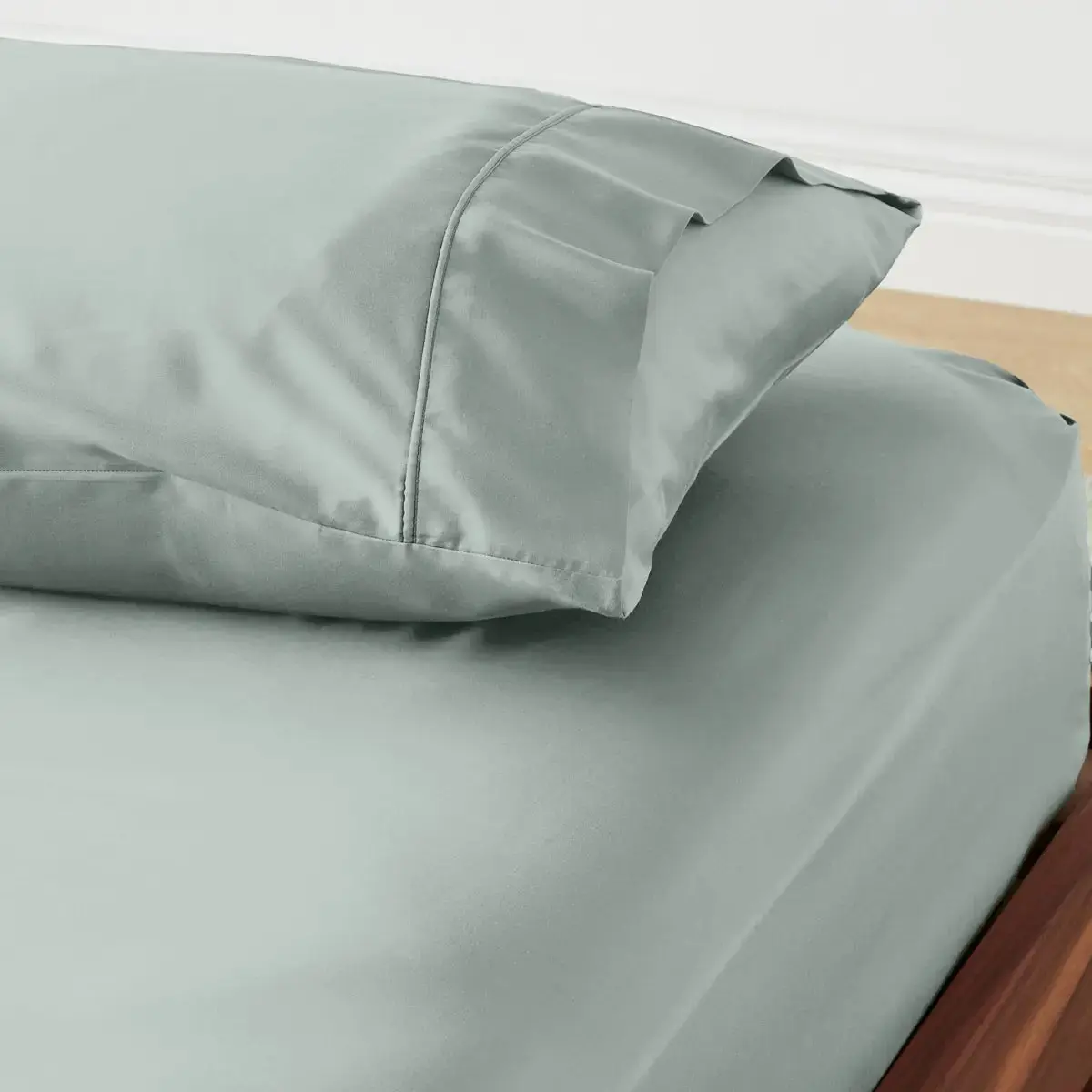
Protect your health and pillow by giving it the extra care it needs. Made from our exclusive 100% CleanBamboo® Lyocell, try our CleanBamboo® Signature Sateen Pillowcase Sets. It’s smooth as silk, breathable, and hypoallergenic.
Go the extra mile and pair it with our CleanBamboo® Pillow Protector. It has a built-in soft cushion designed to make your pillow softer. Its waterproof TPU lining adds another layer of protection against spills, dust, and dirt.