

The Practical Ways I Protect My Sleep When Life Is Non-Negotiable
As a founder and a parent of two young kids, I’ve learned one thing very quickly: life doesn’t slow down just because we need sleep.
Between running a company, raising a family, work travel, and the constant background noise of modern life, the idea of a perfectly optimized sleep routine can feel unrealistic — sometimes even impossible.
Yet sleep is the one thing that determines how well we show up for everything else — our health, our work, and our families.
And the older I get, the more I see sleep as one of the highest-ROI habits we have.
So instead of chasing perfect habits, I’ve learned to protect my sleep in ways that work in the real world.
Here are a few practices that make the biggest difference for me.
1. I treat sleep like a leadership tool
Early in my career, sleep was often the first thing I sacrificed.
Like many founders, I used to think productivity meant pushing through exhaustion. But over time, I noticed something important: when my sleep deteriorated, everything else did too – focus, patience, creativity, and decision-making.
Now I see sleep differently.
Sleep is not downtime. It’s infrastructure for performance.
During deep sleep, cells repair and regenerate, the brain consolidates memories, and the immune system strengthens. When we consistently sleep poorly, our immune system weakens and our ability to perform declines.
So I think about sleep as an investment with real ROI.
2. I learned the hard way that sleep protects your immune system
For years, I pushed through intense travel schedules and long stretches of work without paying enough attention to rest.
Eventually, my body forced me to slow down.
After a period of heavy travel, my immune system was clearly run down. What started as a simple flu quickly turned into pneumonia. Instead of being out for a couple of days, I was completely offline for nearly a week.
That experience changed how I think about productivity.
We often believe we’re saving time by sleeping less. But when exhaustion catches up with you, the cost can be far greater.
Seven days of lost productivity is a steep price to pay for cutting corners on sleep.
Now I think about it differently: protecting sleep is one of the most practical ways to protect long-term performance.
3. I focus on the habits that happen before bedtime
One of the biggest misconceptions about sleep is that it starts when your head hits the pillow.
In reality, sleep begins hours earlier.
During the day I focus on a few habits that make falling asleep easier:
• getting outside in natural light
• staying physically active
• limiting caffeine later in the day (I actually stopped drinking caffeine after reading “Why We Sleep” by Matthew Walker)
• finishing dinner early when possible
• starting my own bedtime routine as soon as the kids are tucked in instead of trying to send one last email
These simple rhythms help regulate the body’s natural sleep cycle, which makes falling asleep easier – even when the day has been hectic.
If you’re curious about how daytime habits affect sleep, my co-founder Phoebe Yu wrote a great article about this here.
But habits are only part of the equation — the environment we sleep in matters just as much.
4. I protect the bedroom environment
When life is busy, the sleep environment becomes even more important.
My bedroom is intentionally simple: cool, quiet, dark, minimalist and calm.
One rule I keep is no working in bed. As tempting as it is to answer a few more emails from under the covers, the brain needs clear signals about where work ends and rest begins.
Comfort and temperature regulation matters more than we often realize. When your body stays cool and comfortable, it’s much easier to fall asleep and stay asleep (see sleep study).
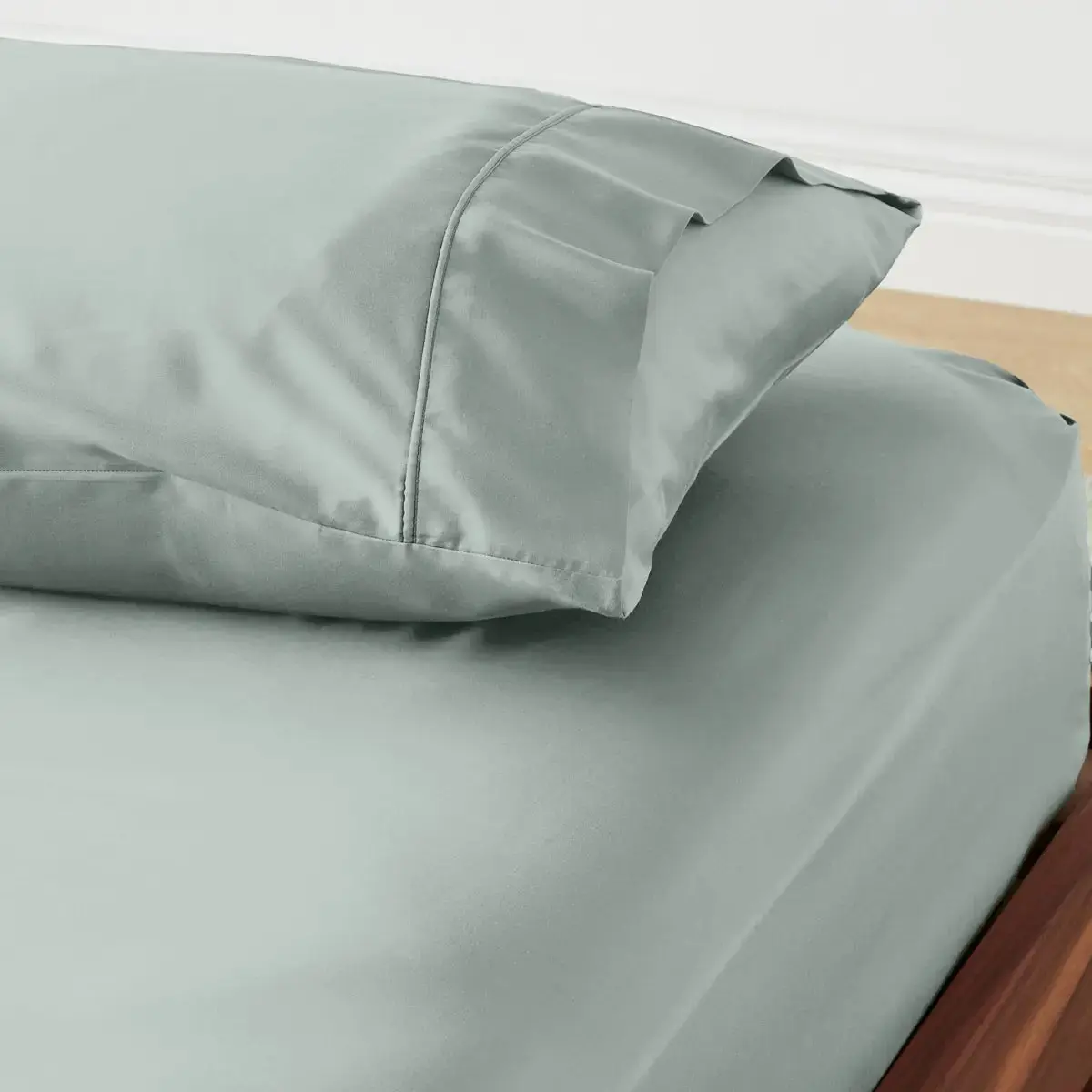
This is actually one of the reasons I care so deeply about what we create at ettitude. Our CleanBamboo® bedding was designed to be naturally breathable, soft, and gentle on the skin – because when your sleep environment feels effortless, it’s easier for the body to fully relax.
5. I build a buffer between work and sleep
Modern life doesn’t have many natural transitions anymore.
We go from work emails to bedtime in a matter of minutes, and our brains never fully shift gears.
So I try to create a “landing zone” before bed.
Sometimes that looks like journaling, reading, talking with my husband, or something simple and meditative like folding laundry.
The rule is simple: almost anything is okay – as long as screens are not involved.
As someone who tends to be highly productive, I had to train myself to think of this time as valuable.
After tracking my sleep with a wearable, I saw a clear correlation between this buffer zone and my sleep score the next morning. It’s a small habit that consistently makes a big difference.
6. I accept that perfect sleep doesn’t exist
With kids, travel, and a full schedule, some nights will always be unpredictable.
And that’s okay.
Instead of stressing about getting everything right, I focus on consistency over time. Protect the basics. Create a calm sleep environment. Support the body’s natural rhythm.
Sleep is not something we can control perfectly – but we can set ourselves up for better rest.
The bigger picture
For a long time, hustle culture framed sleep as something optional. Something you earned after the work was done.
But the older I get, the more I see that the opposite is true.
Sleep is what allows us to do meaningful work in the first place.
During Sleep Month, it’s a good reminder that protecting sleep isn’t about perfection or optimization. It’s about building small habits that support our wellbeing, even when life is non-negotiable.
And sometimes the most powerful thing we can do for our health, our work, and our families is also the simplest:
Turn off the lights.
Get under the covers.
And let the body do the rest.